
Lost Geen Translation
In the Spring of 1998, I was fortunate enough to be invited to spend my senior Independent Study semester in Antwerp, Belgium. I would be studying printmaking under Veerle Rooms at the Karel de Grote Hogeschool (now St. Lucas Antwerpen).
It was the first time I’d traveled on my own. My first time out of the country. My first time going somewhere where the default language is NOT English. My first time living in a European city.
As I walked throughout Antwerp, London, Paris, Brussels, Amsterdam, Bruges, Ghent, and other locations, lots of little things would catch my eye and I’d pick them up or take note. Eventually, I had amassed a decent amount of material and realized there’s no way I’m taking all that stuff back home, and I wouldn’t want to. It was interesting, though, what stood out, as I largely did not notice such things back home. Part of that was due to driving being the primary mode of transportation, and part being routine familiarity.
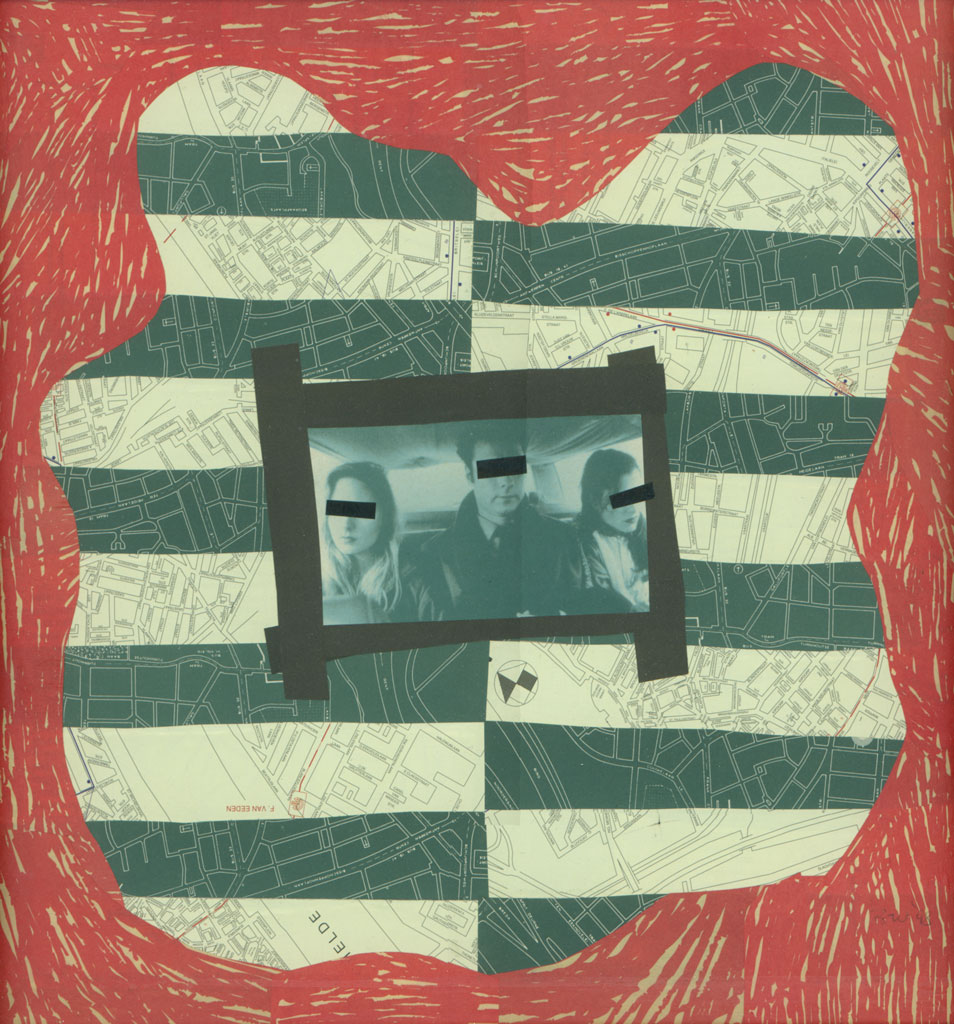
Another theme was getting lost. We didn’t have Google Maps in 1998, or cell phones. So my tape-laminated map of Antwerp went with me everywhere and I got lost A LOT. Which was also a big part of the experience. Having to ask for help or directions, or just going until you can identify the appropriate landmarks and get reoriented is a good motivator to learn more about one’s surroundings and recognize that sometimes, asking for help is the most direct way of getting what you need and want.
This piece evolved into its final form as I thought about being disoriented on many levels, discordant maps, language and other barriers, and the cool, clean aesthetic of Belgian design. It really captured how I could feel completely lost yet in the right place at the same time. The materials for the collage all came from the stuff I’d collected during my commutes and explorations.
In Dutch, and the Flemish dialect of Dutch they speak in Antwerp, “geen” is a word used to negate things in a sentence. So I blended my rudimentary understanding of Flemish with English in naming this piece to call it, roughly, “lost without translation.”